

On Hope
Rio de Janeiro, June 15th 2020.
Anatole France[1] (1882) tells us that “Jean Servien was born in a squalid house joined to a store on Rue Notre Dame des Champs. His father was a bookbinder who made books for the convents. Jean was a sick little child nursed by his mother while sewing the books, sheet by sheet, with the curved needle. One day when she walked through the store humming a romanza, whose words expressed to her the confused splendour of maternal ambitions, her foot slipped on the damp tile.
She instinctively lifted her arm to protect the child she was carrying and, with her chest open, was seriously wounded on the corner of the die-casting press. At first she did not feel very intense pain, but an abscess appeared in her breast that closed and reopened, accompanied by a hectic fever[2] that kept her in bed.
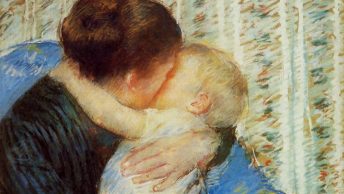
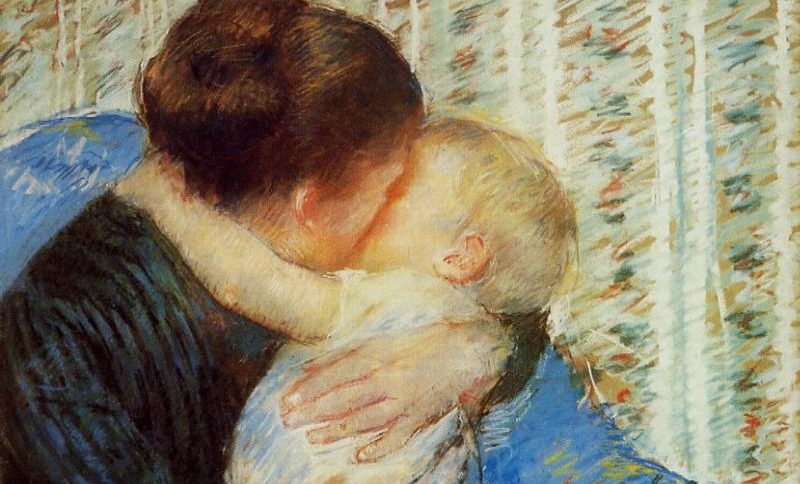
There, during the endless hours of the night, with her only free arm, she snuggled her little boy murmuring to him with a fevered torrid breath a few pieces of her beloved romanza:
Like a fisherman, when dawn is almost here,
Come and watch the dawn awaken …
She especially loved the regular and changing chorus with which she cradled her Jean who became successively, like the song, general, lawyer and potential “Levite”.
She was a poor woman who knew nothing about high social functions except observing the distant brilliance of their wealth and overhearing uncertain revelations from the porters, chamberlains and cooks. Yet she dreamed of her son at twenty, more beautiful than an archangel and covered in decorations, in a hall full of flowers, in the midst of high society women all having as good manners as the vaudeville-theatre actresses.
While waiting, in my lap,
Handsome gentleman, fall asleep.
Then she contemplated this same son, standing this time in a court of law, ermine on his shoulders, saving with eloquence the life and honour of some illustrious client:
While waiting, in my lap,
Nice lawyer, fall asleep.
She then saw him in a shining uniform, in the artillery, on an upright horse, achieving a victory, like those whose portraits she had seen on a Sunday in Versailles:
While waiting, in my lap,
Nice general, fall asleep.
But when the night invaded the room, a new image of incomparable splendours presented itself to her eyes.
In her motherhood, at the same time proud and humble, she contemplated from the dark bottom of a sanctuary, her son, her Jean, dressed in priestly vestments, raising the ciborium in the nave perfumed by the flapping of glimpsed cherubs’ wings. And she trembled like the mother of a god, this poor sick worker whose sick son languished near her in the unhealthy air of a storehouse.
While waiting, in my lap,
My beautiful Levite, fall asleep.
One night, as her husband was giving her a potion, she said to him in a pitying tone:
– ‘Why did you call me? I was seeing the Holy Virgin in the midst of flowers, stones, and lights. It was so beautiful!’
She added that she no longer suffered, that she wanted her Jean to learn Latin. And she died.”
I chose to start the theme of this work from Anatole France because he has started his novel dealing with hope. Mothers often weave hopes-filled dreams for their babies.
The novel develops about the vicissitudes of this boy’s life, who delighted his mother and in whom she had so much hope, but who is left soon as an orphan, which will have a cost for him. The ending is sad, because this young man, who had so many expectations from his loving mother, ends up with his face in the mud, shot down during the Franco-Prussian war. It was a war that was not decided by him, over which he had no choice, nor ways of escaping. What do we do and what does happen to our hopes?
“Esperança”, hope in Portuguese, is a word of Latin origin, sperantia, derived from the verb sperare, which means the act of waiting for what one wants, expectation, faith in getting what one wants. The word hope derives from Middle English hopen, from Old English hopian and it has the same sense, to expect, hope. We see then that desire and hope are articulated, but like everything that concerns human beings, they can be articulated under the aegis of the life drive or the death drive. Dictators, for example, wish to perpetuate themselves in power, often through their descendants, political heirs in successive generations. Their hope is that there will be no questioning or disagreements regarding their proposals and their way of thinking and acting, which is usually quite archaic. They hope to be worshiped forever, because hope involves time, it is always looking to the future. It is also what sustains a people, a nation, under different political regimes: “Better days will come!” Such an expectation leads many people to embark and be willing to face the storms of a journey into the unknown, to face the sea for days on end in extremely precarious conditions, on a journey full of uncertainties, threats and unforeseen circumstances, in the hope of better living conditions or simply that there may be a possibility of survival.
I advance that this is not a work with religious or philosophical pretensions. Some references from these perspectives will be made as a means of approaching aspects related to the theme that I found interesting. Therefore, according to the Compendium of the Catechism of the Catholic Church (2005), prepared by then Cardinal Joseph Ratzinger, hope is the second of the three theological virtues, together with faith and charity. What is implied here is that, being the human being elevated to the supernatural order – which I, personally, always found an unfounded claim – natural virtues, although necessary, would not be enough. Thus, at the moment of baptism, God would grant to the Christian, in addition to grace, the three theological virtues. It is curious that hope has as its symbol the anchor that, due to its specific shape and appropriate weight, secures the vessel to the anchorage, prevents it from drifting or taking an undesirable course. The Virgin Mary is referred to as a safe haven, the mother of hope.
Faith makes us believe what is taught to us is truth – which can be very dangerous if we do not maintain the ability to think on our own and delegate to others to think for us – and charity corresponds to the love that directs the will to search the good of the other person through the identification of God’s love for us. Thus, it implies loving God above all things and others, not as ourselves, but as Jesus loved us. We know the confusion that this can generate when this speech is adopted by people with malicious intentions, who try to make use of faith and charity as a means of inspiring hope and winning the election, if possible, forever.
It is worth remembering that the idea of virtue, derived from Greek philosophy, alludes to moral and ethical behaviour. Theological virtues are complementary to the cardinal virtues as proposed by Plato (428-347 BC). They correspond to wisdom (prudence), moderation (temperance), courage (strength) and justice. Justice is a founding and preserving virtue, which binds the others together. It implies acting with reason, therefore with knowledge, permitting that reason annuls desires and, thus, making possible to act with self-control and self-restraint. By doing so the strength of the spirit is maintained and allows facing fear, intimidation, danger and uncertainty.
Wisdom or prudence concerns the ability to make decisions based on personal knowledge, experience and knowledge based on science, as far as it may have arrived at a certain moment in human evolution. Both help to deal with the unknown, when one has to endure it without despairing or disorganizing and, thus, becoming able to bear the resulting helplessness experience. Wisdom will allow one to choose between right and wrong, even when knowledge is lacking, and such recognition will allow one to act prudently, for the good of yourself and others. Plato considered that only with reason can one be truly virtuous. Ancient Greek philosophy understood wisdom as a virtue to be pursued by legislators and power holders, as it would enable them to be cautious and to act sensibly.
Thus, according to Plato, a person would become fair when he had access to the other three virtues. He understood that the four virtues were interdependent and that the human soul would be perfect when it acted in harmony with them. He argued that society should be ordered according to justice, which can be achieved only when the human soul is well ordered. According to him, only just people can create a just society.
Obviously, what I am talking about should make us consider how privileged we are, surrounded by all these virtues, we have nothing to worry about! Even so, we can ask ourselves what makes us feel hopeful in particularly adverse conditions, when all these virtues may be quite disregarded, with humanity leading unreasonably and fearlessly, without justice, without responsibility, mercy or pity.
The virtuous human being presented to us by Plato is fundamentally based on reason, but affective internal resources are necessary for such a balance to be possible, resources that emerge in childhood, with the process of becoming a subject that occurs in the relationship with another person, and more than one. Freud (1912: 1969), in a footnote to his article The Dynamics of Transference, points out that for a person to be successful he needs two sets of etiological factors that must work together, and that he rarely will be with just one of them: Talent and Luck determine a man’s destiny.
Talent has to do with what Freud referred to as the subject’s predisposition which, in my opinion, refers to the drives entanglement, with the death drive ideally under the aegis of the life drive – which, of course, does not always happen. Luck concerns factors of the environment, which not only correspond to its concrete exteriority, but also to the psyche of the other-subject, so important in the subjectivation process to be developed by the infans, so that he has a psychic apparatus that allows him to transform the drive source into thought, the gross experience into thought experience. This other-subject who takes care of the baby has his/her own history, which in turn gets involved with other people’s stories, in synchronic and diachronic senses, that is, with the psychic-emotional baggage that corresponds to their own experiences, associated with those passed on to them by previous generations, whether in a healthy or pathogenic sense, with possible marks of traumatic experiences that cross the ages. We can then ask ourselves what does all this have to do with hope.
The baby needs to be welcomed, he needs to seduce – and babies tend to be seductive – requires personal care, a safe lap, empathy and rhythm in the exchanges established with the person who takes care of him / her. A baby needs respect because he is a complete human being at a certain stage in his/her life. However, not everyone is so lucky, which in my view will restrict his/her chance of hope.
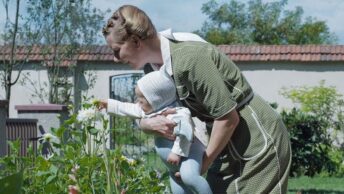
I remember a situation that I could observe on a Friday morning, when there is an open market in Our Lady of Peace Square, located in Ipanema district in the city of Rio de Janeiro. There is a very busy intersection in this area, with a traffic light and where a church, a university centre and a very popular bakery are located. Hot day, 10 am, congested traffic, horns, traffic cop whistling vigorously, students, all crowded, a fair in full swing, agitation, and screams of sellers. The place was a real buzz! A poor, black woman had accommodated her 8-month-old baby, seated and leaning against the railing on the inner side of a flowerbed without plants beside the church, while she arranged a space with the cardboard of an unpacked box. She then accommodated her baby in this cardboard, with the crate as a support and, sitting on her legs, began to feed him with something she had prepared and which was in a bowl that corresponded to a milk can. She used a tablespoon, that’s what she had. It was evident the delight with which she started feeding her baby, who, in turn, looked at her absolutely charmed. They only had eyes for each other, in an intimate moment of mutual pleasure.
I remembered Bowlby (1976: 1981) who stated that not only does the mother feed her baby, but he also feeds her for the pleasure he gives her in feeding him. The same author pointed out that a well-balanced diet is worthless in terms of proteins and vitamins, if it is not given with affection. I remembered Winnicott (1971: 1976) when saying that when the baby suckles, he looks at his mother’s face and, when looking at the mother’s face, it is himself that he sees. What a wonderful moment I had the opportunity to observe! I thought about the effects of this mutual enchantment for the psychic organization of this baby, who knew he was loved and wanted, even though, due to his precarious social condition, he would probably face many disadvantages throughout life. I felt hope for him, because I imagined that he was experiencing, with his mother, the value of his person and life. With a little luck, who knows …
I associate the theme of hope with the film The Pianist (2002) directed by Roman Polanski and starring Adrien Brody, based on the autobiography of the same title written by the Jewish-Polish musician and composer Wladyslaw Szpillman. He was born in December 1911 and worked in Warsaw on Polish radio until Germany invaded Poland in 1939. He was then 28 years old. With his family, he moved to the Warsaw Ghetto, where he continued to work as a pianist in a restaurant. When the population of the ghetto was sent to concentration camps, he managed to escape and take refuge in different hiding places, with the help of one or another person, or in abandoned buildings, always in conditions that we could refer to as “on the razor’s edge”, going through numerous deprivations, hunger, cold, helplessness, always at risk of being discovered or imminent death.
The film is beautiful and, for me, the most poignant and striking scene is at its end, when we see the protagonist, skinny, wearing a coat from the German army and clinging to a can of pickled cucumbers, which he was unable to open for lack of means. But he didn’t leave the can! A German officer, aware that the war was already lost, finds him wandering around a ruined and abandoned building, where there was a piano and, knowing him to be a pianist, asks him to play. He, starving to death, places the can on the piano, sits down and plays, and the music seems to comfort this officer, equally desolate and helpless, though probably less hungry. Saddened and distressed, he lets him go, and so he takes his can of cucumbers, puts it under his arm and leaves the building. The photograph is then impressive: from the image focused on the character, the view is gradually enlarged and then he is seen alone, tiny, in an immense, icy scenario, of total desolation, where there is only him over rubble as far as the eye can see. It is shocking to see what human beings are capable of doing to other human beings. It is impressive to visualize their destructive capacity, their violence, and their hatred without mercy. All of this stems from illusions, from chimeras of belonging to an allegedly superior and pure ethnicity, and thus having justified the intention to exterminate other persons, seen as inferior and weak, therefore, without the right to life. These are lies, but there are those who believe in lies as if they were truths, which have to do with human stupidity. Cruelty is directly related to mental narrowness. How to maintain hope in such circumstances? I believe that this will be possible, in large part, from the experiences of the baby that one has been.
Let’s go back to the movie. Our pianist continues to walk as he can over the ruins, always clutching his can of cucumbers, guarantee of survival in those circumstances, when he is almost shot to death for having been mistaken for a German officer, since he was wearing the coat of one. They ask him with emotion why he was dressed like that and he answers, simply: “Because I’m cold!” He had nothing else to wear.
For me, this film speaks of hope all the time. In one of the scenes, welcomed and hidden, he sits at a piano and we hear the sound of music. We know that there are German soldiers in the vicinity, we are grieved, he will be heard, he will be discovered, arrested and deported! The camera’s focus downward and we find that his hands don’t touch the keys, that the music is in his head. I think: that’s how his hope is sustained, music is his continence, it means for him life and keeps him alive! In that total desolation in which he found himself, alone in the world, since all his family members had been exterminated in Treblinka, in that almost absolute lack of perspective, music fed him, gave him a safe lap and hope.
Shortly after the end of the war Szpillman wrote an account of his experience, published in Poland under the expressive title Death of a City (1946). The number of copies was reduced by the fact that the communist authorities censored him because they were against his view of the war. Only fifty years later, in 1998, his account was reprinted, first in German, then in English and in different languages, entitled The Pianist, obtaining worldwide repercussion. Szpillman was married for fifty years to the Catholic doctor Hallina. They had two children, Andrzej (dentist, composer, music producer and editor) and Christopher (PhD in History, mastering several languages, three of them without any accent). A scholar from Japan and passionate about its language, he moved there in 1976, adopted the country as his own and started teaching Japanese history to Japanese people! Szpillman continued his musical career, became one of the most productive Polish composers. He died at the age of 88, in July 2000.
It is curious to consider that Wladyslaw Szpillman survived the atrocities of World War II and his son Christopher fell in love with Japan in the 1970s, a country that was part of the triple alliance, but for which peace has become a religion. In an interview with Jay Nordlinger in July 2018, Christopher Szpillman said he considered a religion to be better than war and conquest. He makes a very expressive analogy: “Peace is like health. You can keep it, but you can’t prevent disease by being healthy. War is like disease. It’s not good to say: ‘We believe in health, so doctors are street vendors’. The world is full of bad actors and Japan’s neighborhood has a few: China, on the one hand, and North Korea, on the other, both nuclear-armed nations”. Regarding Christopher’s father, who was 40 when he was born, he said that as a child he saw him as an old neurotic who had nightmares. Evidently this observation of his interested me in particular because, as it is known, psychoanalysts love dreams!
I imagine that Wladyslaw was a welcome baby, loved and cared for, with his talent recognized and valued, which the film suggests. It was his internal resources that enabled him to remain in the hope of surviving in such dire circumstances. Writing his memories right after the war can be thought of as a means of elaboration and sharing. His readers thus became witnesses, but he found himself silenced due to a dominant, intransigent and imposing policy, which did not allow an appreciation of events different from the Stalinist dictates, with its overwhelming policy of domination. While continuing with his work, he married and had two children who in turn moved vigorously into life. We can ask ourselves what marks have been left in him and his children by so many losses, pain and suffering, but we have no way of knowing. I suppose that the paternal nightmares referred to by Christopher indicate the traumatic effects involved in his struggle for better days, which were to come and which, in the end, eventually arrived.
References:
Bowlby, J. (1981) Cuidados maternos e saúde mental. São Paulo: Martins Fontes. (Original work published in 1976.)
France, A. (1882) Les désirs by Jean Servien. Paris: Calmann-Lévy, 92 e. édition.
Freud, S. (1969) A dinâmica da transferência. Standard Brazilian edition of the complete works of Sigmund Freud. v. XII, 133-143. Rio de Janeiro: Imago. (Original work published in 1912.)
Winnicott,
D. W. (1975) O brincar e a realidade.
Rio de Janeiro: Imago. (Original work published in 1971.)
[1] Free translation of Anatole France’s text in Les Desirs de Jean Servien (1882).
[2] Progressive consumption of the organism; phthisis.